


Ammobia's low-capex synthesis will power the first ammonia solution in Lummus’ portfolio, meeting ammonia demand for low-carbon maritime fuel and energy storage and transport
Ammonia has spent the last century as fertilizer's quiet workhorse — an essential component often created in massive, capital-intensive plants. That's starting to change, and a new partnership announced today is another indicator of how fast the shift is happening.
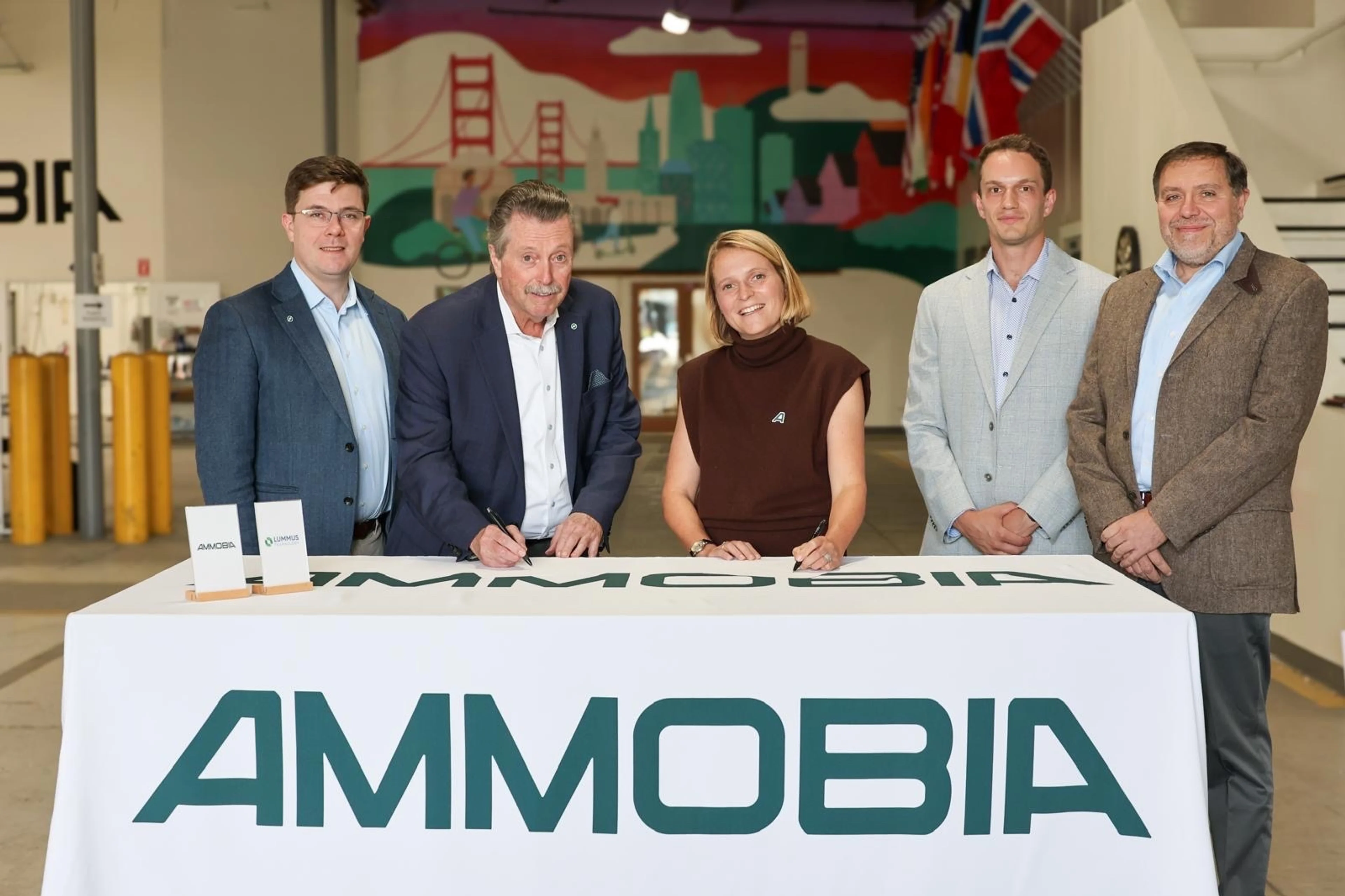
Ammobia, a developer of breakthrough low-cost, modular ammonia production technology, today announced an agreement with Lummus Technology, a global provider of process technologies and value-driven energy solutions, to license and deploy Ammobia’s ammonia production system. Through this partnership, Ammobia’s technology is to be deployed in commercial installations worldwide and used in integrated solutions that complement Lummus’ hydrogen portfolio, including maritime fuels and energy storage and transport. Ammobia’s “Haber-Bosch 2.0” process will be the first ammonia technology in Lummus’ portfolio.
Meeting the Growing Demand for Ammonia
Ammonia is already the backbone of the fertilizers that feed roughly half the world's population, but a second market is emerging fast — ammonia as a low-carbon energy source. It can be shipped and stored using a lot of existing infrastructure, which makes it attractive for both maritime fuel and long-distance energy transport to offer greater access to resilient energy. Grand View Research projects ammonia production will grow 58% by 2033, driven largely by this new demand.
Ammobia's low-capex synthesis uses the "Haber-Bosch 2.0" process, which runs at lower temperatures and pressures than conventional methods. Because of this, Ammobia says its technology cuts capital costs by up to half and overall production costs by 10-30%. Crucially, it's modular: instead of one enormous facility, customers can build smaller, standardized units, add capacity incrementally, or retrofit existing sites.
“Ammobia changes the economics of producing ammonia from any energy source and does it in modules rather than the world-scale plants that have defined this industry for a century,” said Karen Baert, Co-founder and CEO of Ammobia. “Customers can add capacity through a greenfield project or an upgrade to an existing operating site. Lummus brings the engineering rigor, project delivery, and global relationships required to deploy it, which lets Ammobia stay focused on advancing the core process. Together we can make ammonia's newest applications, from resilient power to clean maritime fuel, commercially viable.”
Lummus Brings Commercialization, Reactor Process and Thermal Expertise
A more cost-effective synthesis process is only useful if it can actually be scaled and operated reliably — and that's where Lummus comes in. The company has decades of experience taking process technologies from initial concept to commercial scale.
The idea is flexibility: because Ammobia's process can run on any energy source, customers can pair it with whatever feedstock is cheapest or most available locally, rather than being locked into one input.
“We have a long track record of partnering with innovators to scale breakthrough technologies that address the evolving needs of the global energy market,” said Leon de Bruyn, President and Chief Executive Officer of Lummus Technology. “Ammobia’s technology is an important addition to Lummus’ portfolio and a leap forward for the industry. This cutting-edge solution has the power to transform ammonia production to be more economical and lower carbon, support emissions reductions in the shipping industry, and significantly reduce project costs.”
Ammonia Projects That Are Financeable, Flexible, and Faster to Deploy
Developers and operators can deploy Ammobia through Lummus with the option to leverage an integrated solution that embeds Ammobia within Lummus’ hydrogen portfolio. Benefits include:
- Bankable projects with limited risk: Lummus’ extensive, proven performance and production guarantees stabilize plant development risks using Ammobia's standardized, modular designs.
- No billion-dollar price tag: Ammobia’s reengineered synloop significantly reduces the initial capex investment required and lowers overall ammonia production costs.
- Freedom from a single feedstock: Ammobia's synloop runs on any energy source and Lummus’ hydrogen technologies span feedstocks, so customers can build around the cheapest or most abundant local energy, including a range of gas reforming and electrolyzer technologies, both established and emerging, as well as geologic hydrogen and renewable energy sources.
- Faster to deploy: Ammobia's repeatable design, combined with Lummus’ engineering and project execution capabilities, enables the rapid delivery of new packaged units to global customers while reducing timelines and risks associated with conventional ammonia projects.
- More ways to add capacity: Medium-scale, modular plants and retrofits using Ammobia’s designs, guaranteed and delivered by Lummus, create new ways to add capacity beyond the megaprojects that have long defined the ammonia industry.
The Bigger Picture: A Market Projected to Grow by 58% by 2033
Ammonia demand is growing well beyond its traditional chemical uses. It already forms the foundation of 70% of fertilizers, which are responsible for feeding half the world’s population. Grand View Research projects ammonia production increasing 58% by 2033, driven by emerging demand as a maritime fuel and for power generation.
Ammobia’s technology is engineered to serve this full range of end markets. The Lummus partnership focuses on the energy generation opportunity, where the two companies will work together to bring projects to market at scale. Ammobia continues to advance its technology across ammonia’s other major segments, including fertilizer and industrial production.
- Energy Storage and Transport: Ammonia is one of the most practical ways to import and store low-carbon energy using existing infrastructure, giving Europe, Japan, and South Korea access to resilient energy. Ammobia's low-cost synthesis makes ammonia’s use as a carbon-free fuel for power generation, an emerging source of demand, significantly more economical.
- Maritime Fuel: Ammonia has emerged as a promising low-carbon shipping fuel, and the fleet is already forming. As of June 2026, 441 vessels on order or in the water are either ammonia-ready or ammonia-fueled. As that fleet grows, the main challenge becomes securing cost-competitive supply. Ammobia’s production technology can help meet ammonia bunkering demand at prices competitive with conventional marine fuel.
- Fertilizers: Agriculture remains ammonia’s largest market by volume, and one where modular production can help plants be located closer to where the product is used, reducing exposure to long, concentrated supply chains. Ammobia’s plants are designed for regional siting, reducing supply chain risk.
The companies will begin identifying their first commercial projects in the coming months, prioritizing power generation and maritime fuel.
