


Why the right combination of scale, integration and technology can create a lasting competitive advantage
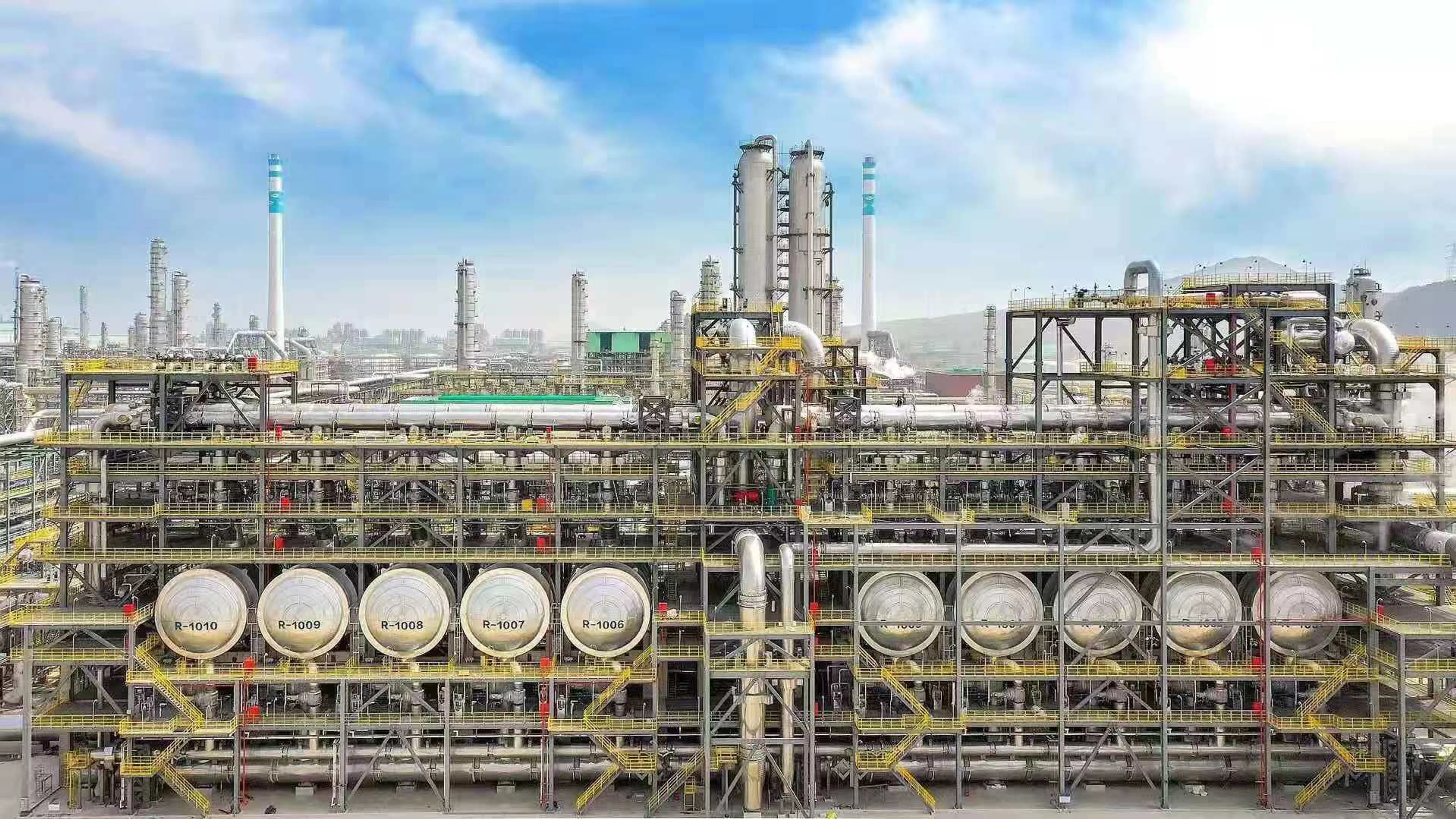
Why would a company invest in the world's largest propane dehydrogenation (PDH) unit during a global propylene surplus?
That's the question explored in a recent ICIS article, featuring Zhejiang Petroleum & Chemical's (ZPC) selection of Lummus Technology's CATOFIN® process for a 1.2 million metric ton-per-year PDH unit. Once operational, the PDH unit will become the world’s largest.
Lummus Chief Business Officer Romain Lemoine sat down with Al Greenwood at ICIS to discuss what drives investment decisions during market cycles and how scale, integration and technology can create a lasting competitive advantage.
"When you look at [an] investment that big, you don't look at four or five years. You look at 25 years plus," Lemoine said.
The Polypropylene Investment Playbook
The ZPC project is a good example of how industry leaders are approaching major capital investments.
In a competitive market, success is increasingly determined by the ability to produce at the lowest cost, operate reliably and capture value across the entire production chain. That is why the industry's most resilient projects tend to be large scale, maximize integration and use technologies that provide flexibility and reliability.
Scale delivers efficiencies that smaller facilities simply cannot match. Integration unlocks additional value by connecting refining, petrochemical and derivative production assets. Technology enhances efficiency, reliability and operational flexibility throughout the life of the asset.
For the ZPC project, those advantages come together in a single complex. The PDH unit will be integrated with refining and petrochemical operations, creating synergies that maximize feedstock utilization, reduce waste and improve overall economics.
"Any molecule that comes in the complex is fully utilized for what comes out," Lemoine told ICIS.
Technology Choices That Stand the Test of Time
Those who have been in the energy industry for a while know market conditions will change. But, the technologies chosen today will remain in operation for decades.
That's why technology selection remains one of the most important decisions producers make. Beyond providing propylene for downstream polypropylene production, advanced PDH technologies must deliver the reliability, flexibility and efficiency needed to remain competitive through both downturns and recoveries.
CATOFIN technology has repeatedly demonstrated its ability to operate at world scale, while incorporating advances in automation and operating efficiency that help producers reduce costs and improve performance to deliver strong results in an oversupplied market.
Positioned for Long-Term Growth
While today's headlines focus on oversupply, the long-term fundamentals underpinning polypropylene demand remain compelling. Population growth, urbanization and rising living standards continue to drive demand for the materials that enable modern infrastructure, transportation, packaging and consumer goods.
The companies best positioned to succeed are those whose operations are built with a long-term perspective, supported by proven technology and designed to maximize value across the entire asset chain.
In today's market, competitive advantage is no longer created by capacity alone. It is created by making the right technology choices and assets that can thrive in any cycle.
Note: the image above is not of a ZPC facility.
